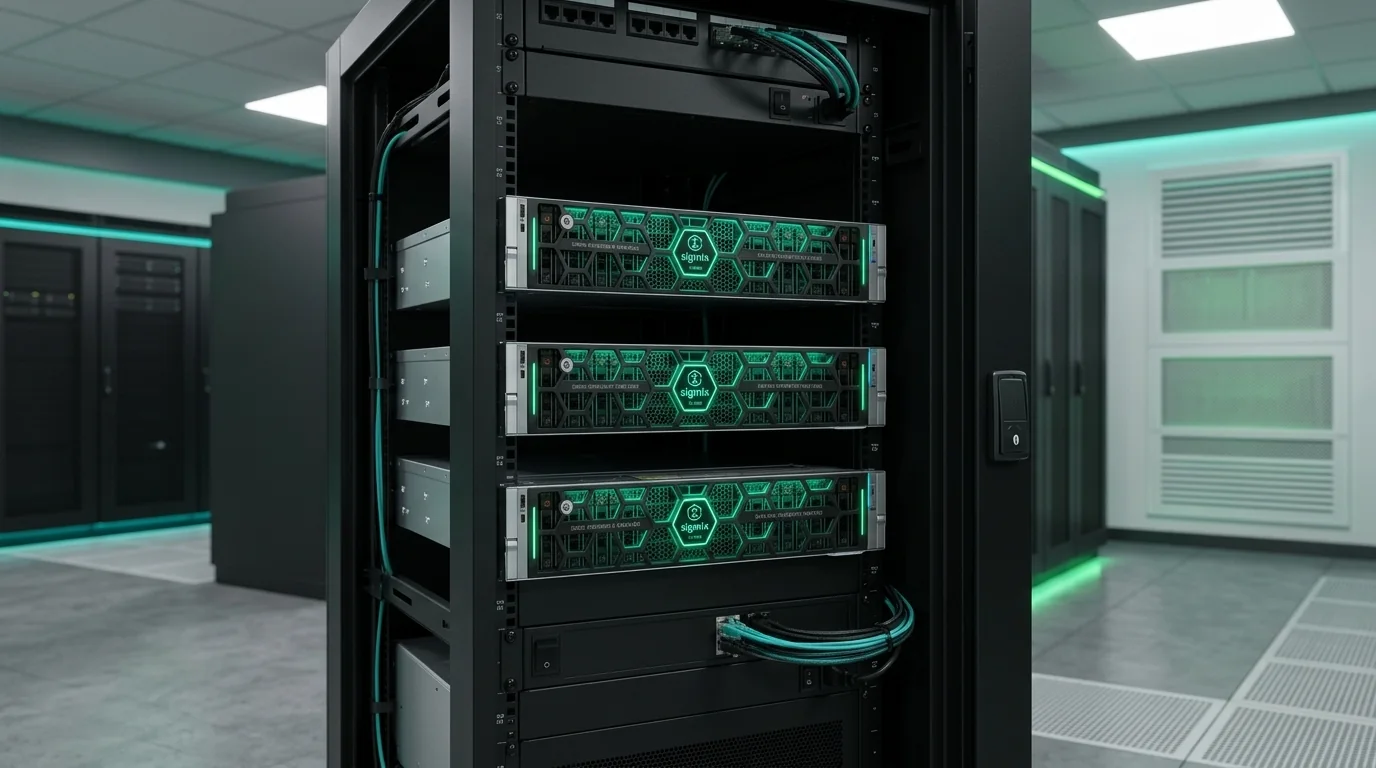
Single node
One appliance, one site. The usual starting point — a department, a branch, a single sensitive workload.
Our scrubbing & audit layer, running Sigmix-authored firmware — with an optional PCIe card for the appliance.
Explore Sigmix Guard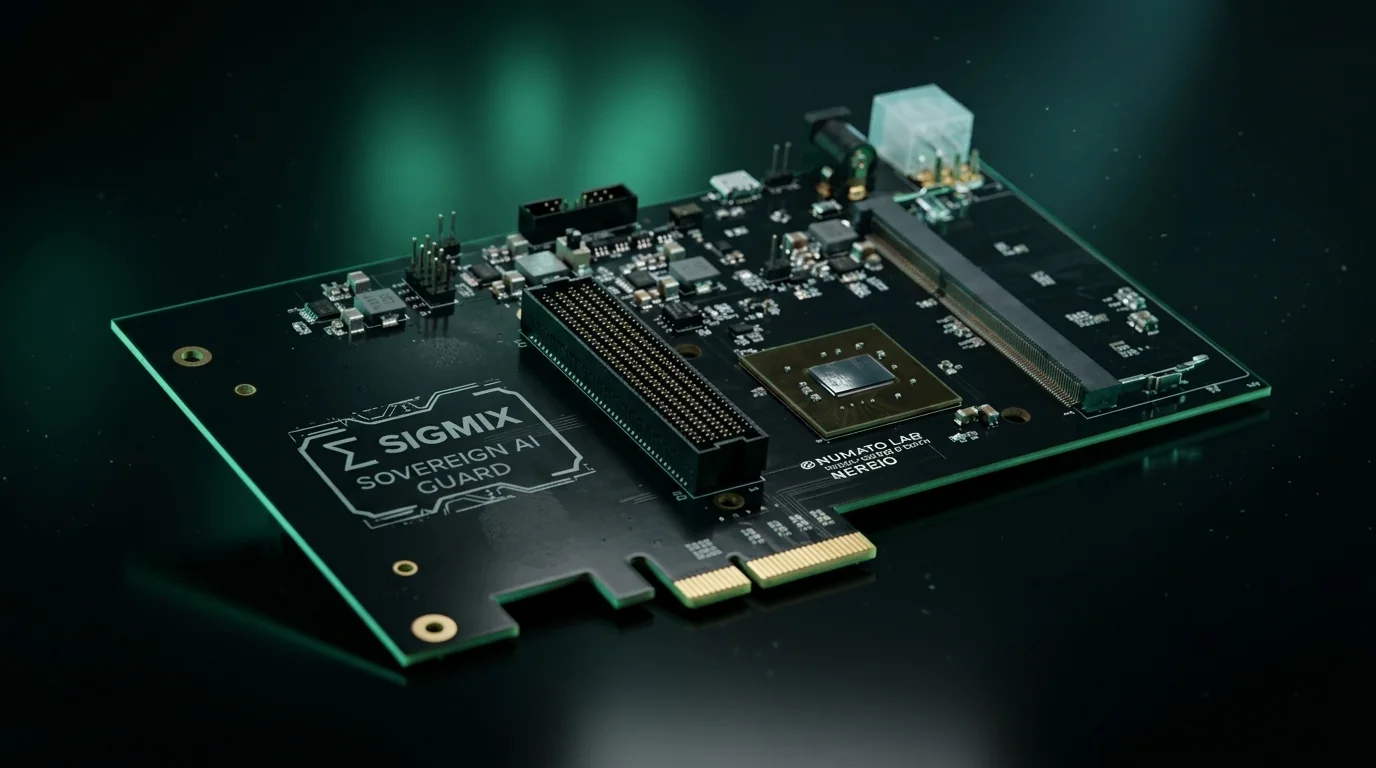
Every request served on-box, sealed from the internet. KSA Cloud runs elastic and in-Kingdom.
See your postureGenerative AI — chat, documents, image and video — inside your own data centre, sealed from the internet. Built, hardened and shipped ready to rack. Live in weeks, not months.
// no egress · sealed · SHA-256 verified weights
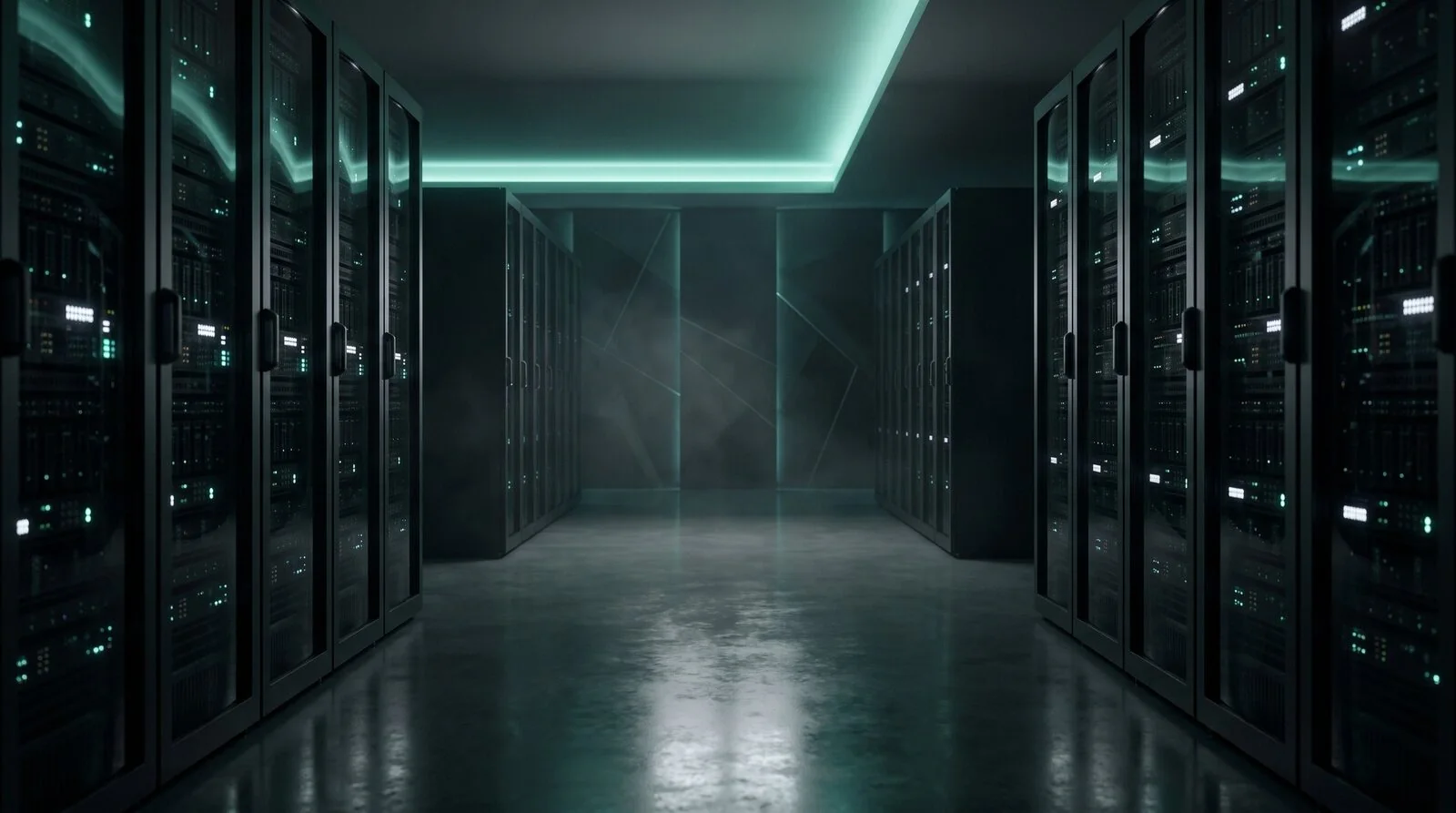 Racked & sealed · egress 0 B
Not a private cloud tenancy, not a VPC with a promise attached. A physical appliance in your rack, running your models, with no path to the internet.
NVIDIA-qualified Dell PowerEdge on a hardened Red Hat Enterprise Linux base — CIS/STIG hardened, SELinux enforcing, Secure Boot and TPM 2.0.
Default-deny networking with continuous canary alerts if the internet ever becomes reachable. Traffic to systems you control on your own network — your SIEM, Active Directory — is expected and stays inside your perimeter. GPU health, utilisation and egress: 0 B are visible in the admin console.
Ships pre-sealed and hardware-verified. Active Directory integration, tamper-evident audit log, and a native Arabic + English employee app on day one.

The appliance is built on NVIDIA-qualified Dell PowerEdge — and we are authorised by Dell to do it. That is not a badge for the website: it is why your procurement team gets genuine Dell hardware with a real warranty, a spares path and Dell's own service network in the Kingdom standing behind the box in your rack.
The claim that nothing leaves is only worth what you can verify. The console shows live performance and health next to the number that matters — outbound bytes.
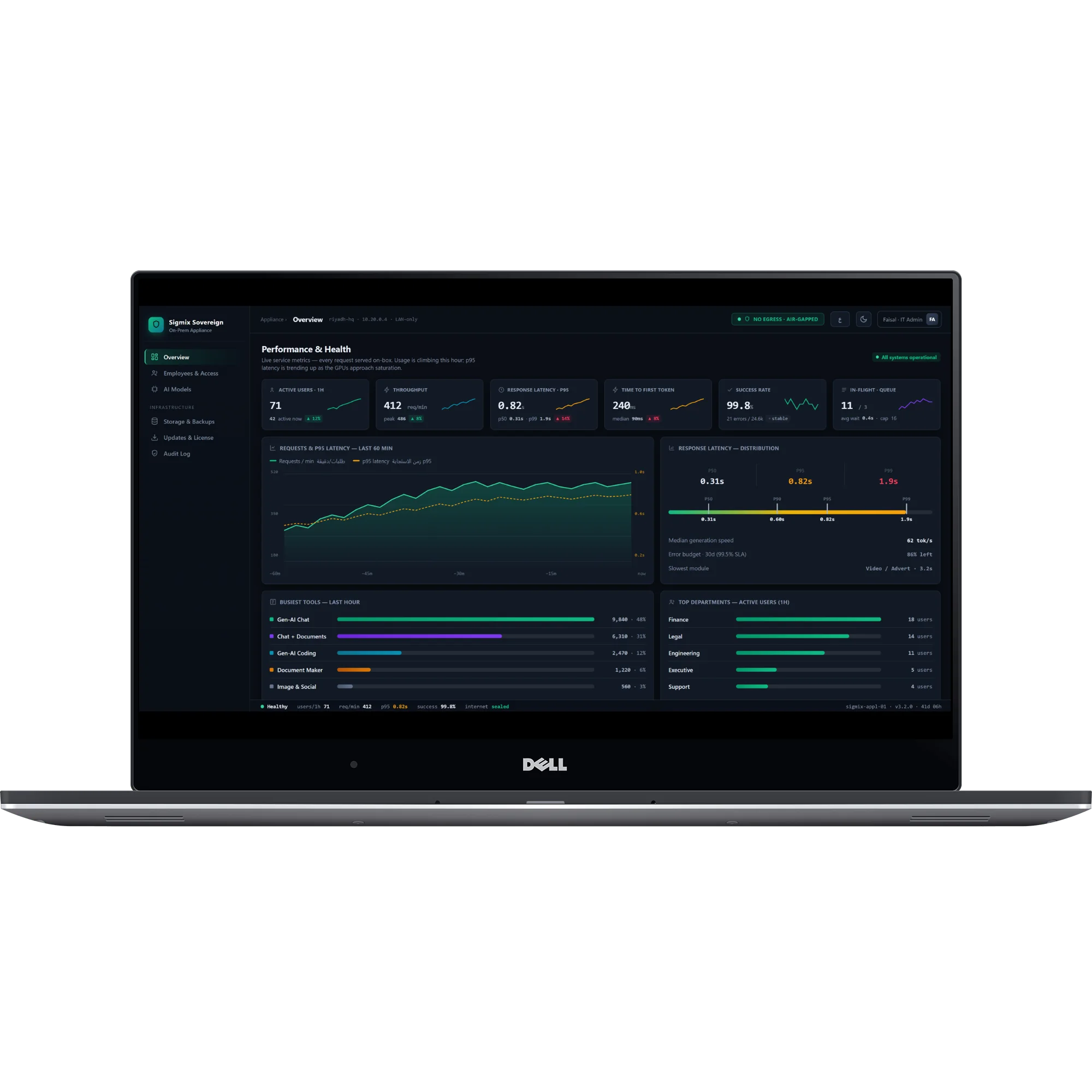 Admin console · live · egress 0 B
Saudi National ID, Iqama, IBAN, payment-card and credential patterns are scrubbed before documents reach your knowledge base, and every request is hashed into a TPM-signed audit anchor on the way out. It ships on the software path with every appliance today — the hardware card is a parallel track that never gates a deployment.
Explore Sigmix Guard
The same sealed software in every footprint. What changes is how much compute sits behind it — and whether the rack is in your building or a colocation facility inside Saudi Arabia.
One appliance, one site. The usual starting point — a department, a branch, a single sensitive workload.
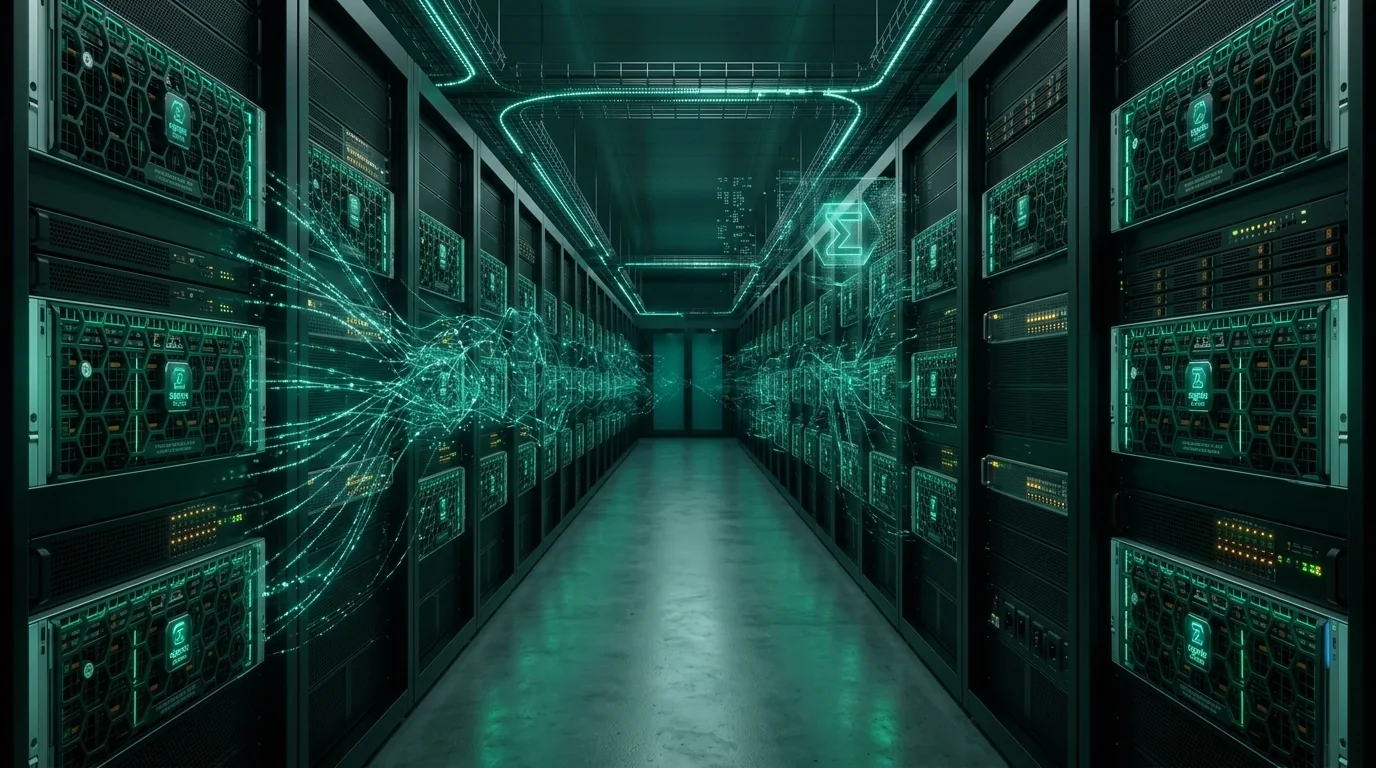
Multiple nodes for capacity and continuity — more concurrent users, larger models, no single box to lose.
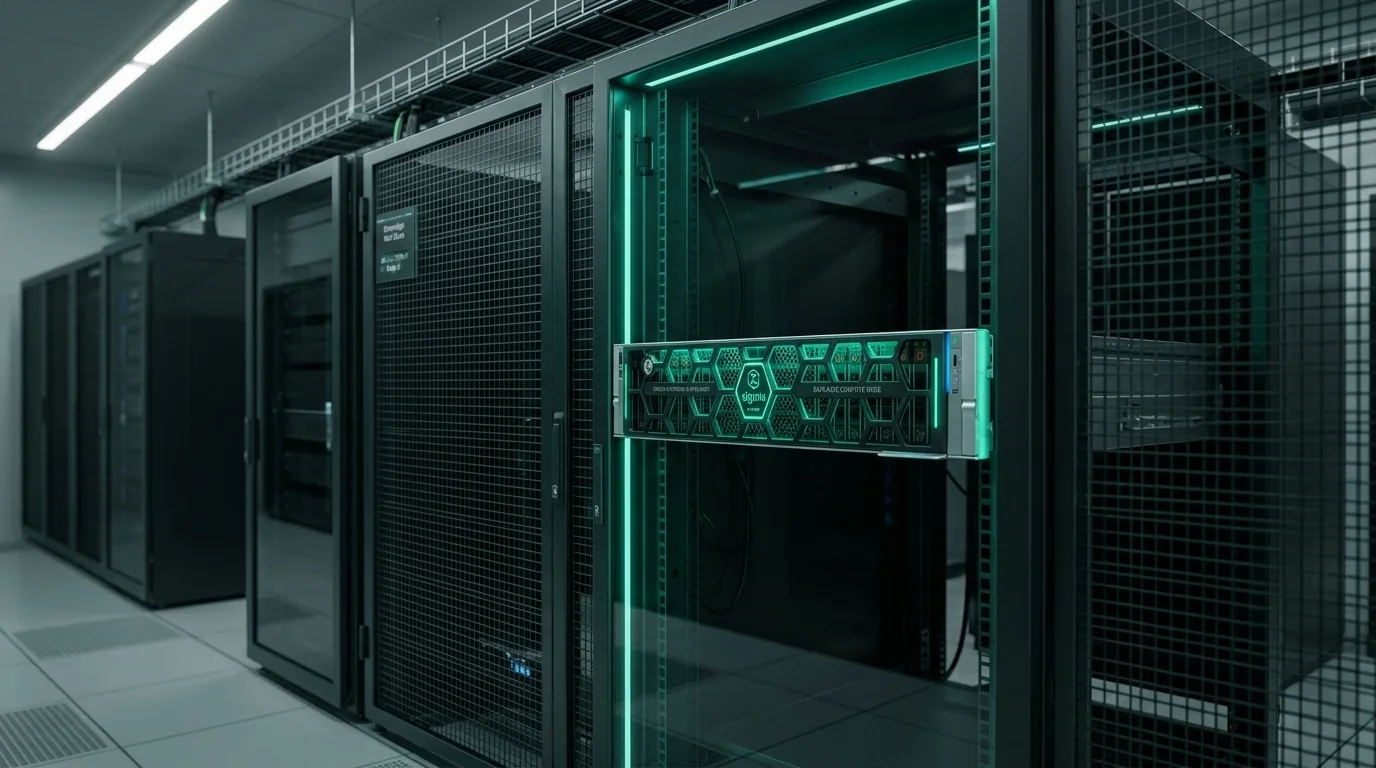
Your sealed rack in a Saudi facility — dedicated cage, not shared cloud, when you would rather not run the room.
Pre-sealed and hardware-verified before it leaves us, so the deployment is a rack-and-configure job rather than a build project.
Every unit is assembled, hardened and verified before shipping. Your team racks it, joins it to Active Directory and points staff at the app — the AI stack, the hardening and the seal are already done.
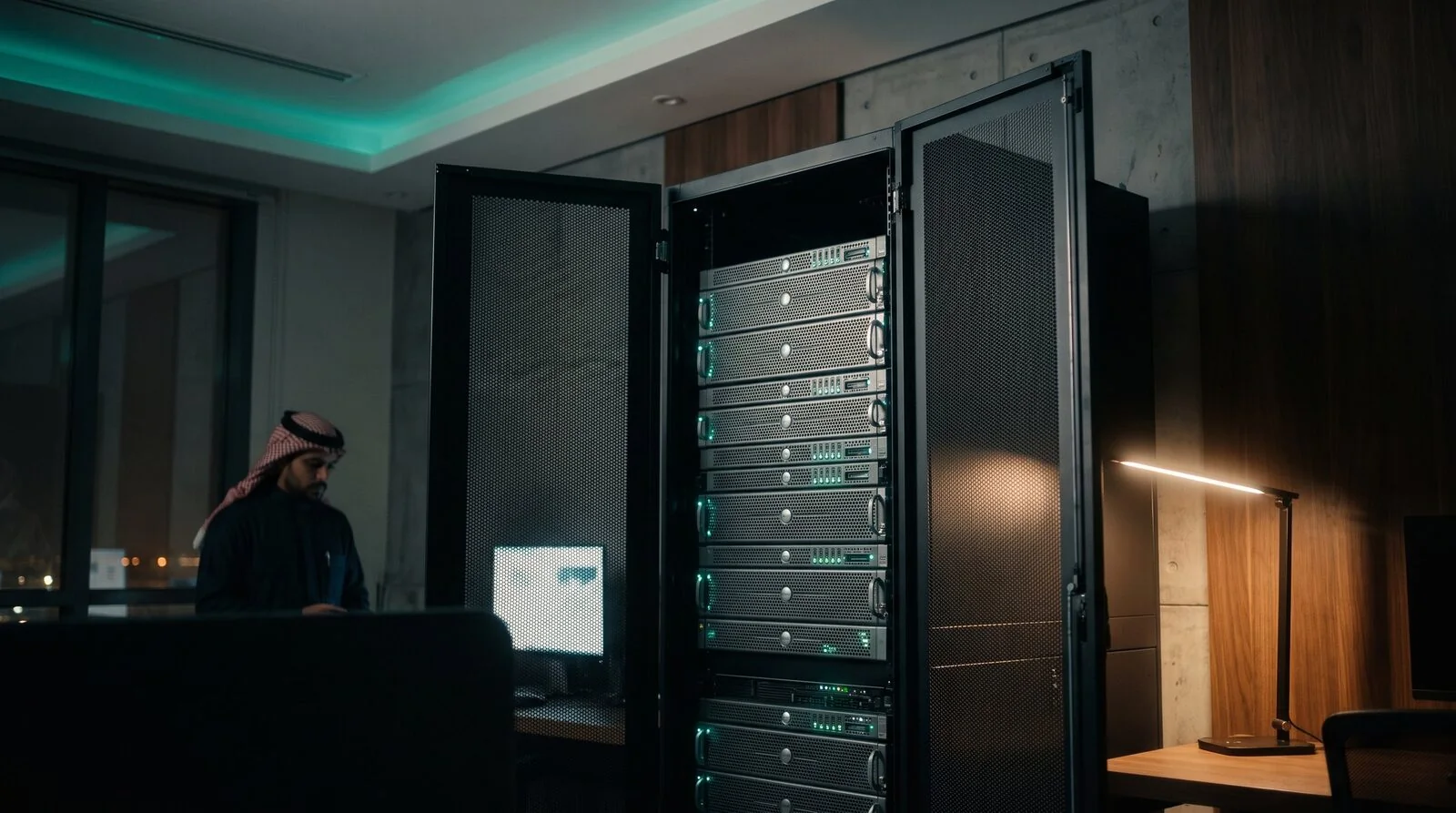 Hardware-verified before it ships
The useful conversation is a technical one — power and rack space, network posture, Active Directory, model tiers, retention and how the audit trail reaches your SIEM. Book the briefing and bring the people who will run it.